Electrical Technology
April 7, 2026 2026-07-03 17:18Electrical Technology
Higher National Diploma in Electrical Technology
The Higher National Diploma (HND) in Electrical Technology conducted by the University College of Ratmalana is a nationally recognized program designed to produce competent electrical technologists for Sri Lanka’s growing industrial and infrastructure sectors. The program is aligned with the national vocational framework and integrates strong theoretical foundations with intensive practical exposure, ensuring that graduates are well prepared for employment in power, manufacturing, construction, and automation industries.
Program Structure and Theoretical Foundation
The HND in Electrical Technology is structured to progressively develop knowledge from basic engineering principles to advanced electrical applications. The theoretical component forms a strong backbone of the program, enabling students to understand electrical systems scientifically and analytically.
Core theoretical subjects include:
- Engineering Mathematics
- Electrical and Electronic Principles
- Electrical Machines and Transformers
- Power Generation, Transmission and Distribution
- Industrial Automation and Control Systems
- Electrical Installation and Safety Regulations
Through lectures, tutorials, and structured assessments, students gain the ability to analyze circuits, interpret technical drawings, calculate load requirements, evaluate machine performance, and understand system behavior under various operating conditions. The emphasis on theory ensures that graduates are not only technicians but technologists capable of supervision, troubleshooting, and system-level thinking.
Practical Training and Industrial Exposure
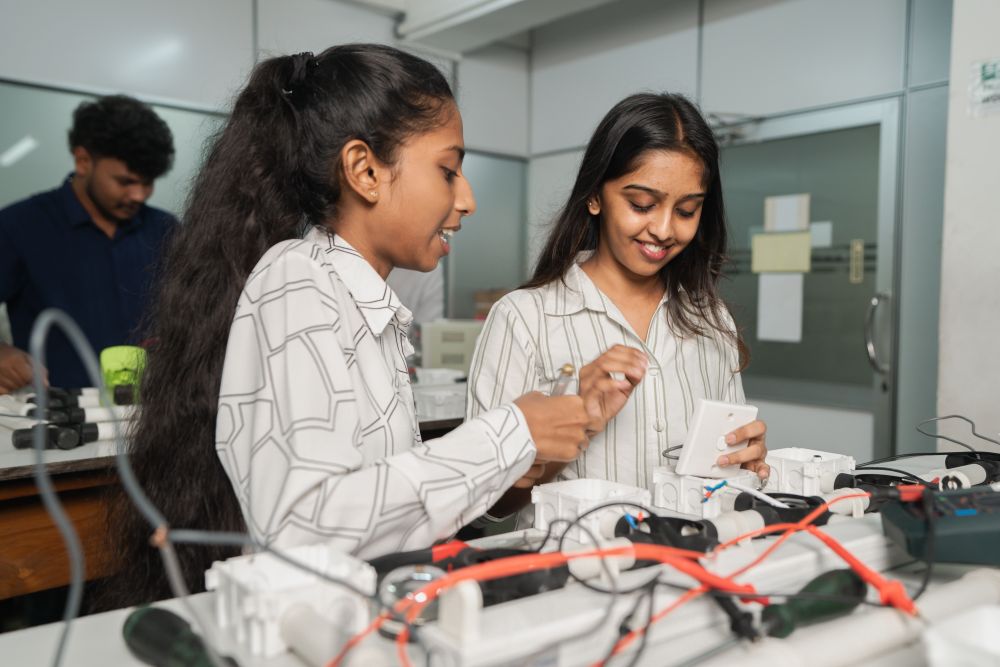
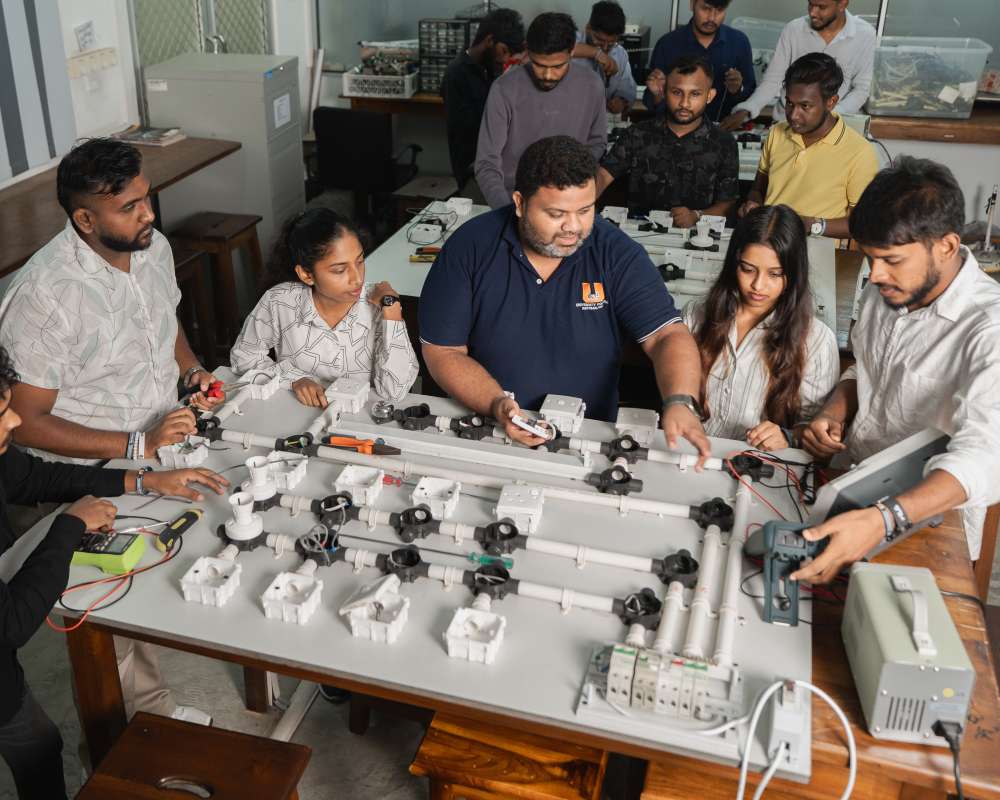
Practical competence is a central pillar of the diploma. The program includes extensive laboratory sessions and workshop practice designed to reinforce theoretical learning through hands-on experience.
Students engage in:
- Residential and Industrial Wiring Practice
- Motor Control and Starter Circuits
- Transformer Testing and Machine Experiments
- PLC-based Automation Systems
- Electrical Measurement and Instrumentation
Well-equipped laboratories allow students to perform experiments on electrical machines, power systems models, and control panels under supervised conditions. Practical sessions focus heavily on safety procedures, industry standards, and correct tool usage.
A key highlight of the program is the structured On-the-Job Training (OJT) period conducted in collaboration with industry partners. During this phase, students gain real-world experience in factories, power stations, construction sites, and maintenance divisions. This exposure bridges the gap between academic study and professional practice.
Learning Resources and Facilities
The University College provides modern facilities to support academic and practical learning. These include:

- Installation and Wiring Workshops
- Computer Laboratories for Simulation and Design
- A Resourceful Library with Technical Textbooks and Journals
- Internet and E-learning Facilities
Students also benefit from industry-linked training opportunities and access to updated technical standards and reference materials. The learning environment is structured to promote discipline, technical accuracy, and innovation.
Academic Staff and Expertise
The program is delivered by qualified academic staff with both teaching and industrial experience. Lecturers possess strong backgrounds in electrical engineering, power systems, automation, and installation technology. Many staff members bring practical industry exposure into the classroom, enhancing the relevance of lectures and laboratory work.
Continuous academic guidance, mentoring, and assessment feedback ensure that students receive personalized support throughout their studies.
Required Qualifications for the Study programs
GCE (A/ L) Physical Science (Maths), Engineering Technology, Art with Credit Pass for Hard Technology (Electrical, Electronic and Information Technology) OR · Credit Pass for Mathematics at GCE (O/L) and NVQ Level 04 Certificate of Electrician (E40S001)/ Electronic Applications Technician (D32S003)/ Industrial Electronic Craftsman (D32S002)
Module Code | Technical Module | Notional hours | Number of Credits |
NVQ Level 5 Qualification Semester 1 | |||
E40T001M01 | Basic Module in Principles of Electrical Engineering 1 | 125 | 5 |
E40T001M02 | Engineering Mathematics | 100 | 4 |
E40T001M03 | Electronics 1 | 150 | 6 |
E40T001M04 | Troubleshooting Techniques | 75 | 3 |
E40T001M05 | Electrical Installation Practices | 100 | 4 |
E40T001M06 | ICT for Electrical Technology | 75 | 3 |
EMTM01 | Workplace Information Management | 75 | 3 |
EMTM02 | Workplace Communication Management | 50 | 2 |
|
|
|
|
NVQ Level 5 Qualification Semester 2 | |||
E40T001M07 | Basic Principle of Electrical Engineering 02 | 125 | 5 |
E40T001M08 | Electronics 02 | 150 | 6 |
E40T001M09 | Electrical Power systems 01 | 150 | 6 |
E40T001M10 | Electrical Machines 1 | 125 | 5 |
E40T001M11 | Industrial Electrical, Electronic Instrumentations | 125 | 5 |
EMTM03 | Planning and Scheduling work at workplace | 75 | 3 |
On the Job Training (06 months) 6 Months on the Job Training under the supervision of NAITA. | |||
|
|
|
|
NVQ Level 6 Qualification Semester 1 | |||
E40T001M12 | Electronic Power Control Systems | 100 | 4 |
E40T001M13 | Electrical Power Systems 2 | 175 | 7 |
E40T001M14 | Electrical Machines 2 | 175 | 7 |
E40T001M15 | Introduction to Industrial Automation | 100 | 4 |
E40T001M16 | Residential Electrical Installation Systems | 100 | 4 |
EMTM04 | Problem Solving and Decision Making | 50 | 2 |
EMTM05 | Teamwork and Leadership | 50 | 2 |
|
|
|
|
NVQ Level 6 Qualification Semester 2 | |||
E40T001M17 | Advanced Programmable Logic Controllers used in Industrial Automation Systems | 75 | 3 |
E40T001M18 | Industrial and Commercial Installation Systems | 125 | 5 |
E40T001M19 | Electrical Switch Gear and Protection Systems | 200 | 8 |
E40T001M20 | Transmission and Distributions | 200 | 8 |
E40T001M21 | Electrical Safety | 100 | 4 |
EMTM06 | Creating and maintaining of learning culture | 50 | 2 |
On the Job Training (06 months) 6 Months on the Job Training under the supervision of NAITA. | |||